
Cog Mobile App Blog
28 December 2024
App For Business: Build vs Buy? Choosing the Right Solution for you
5 January 2025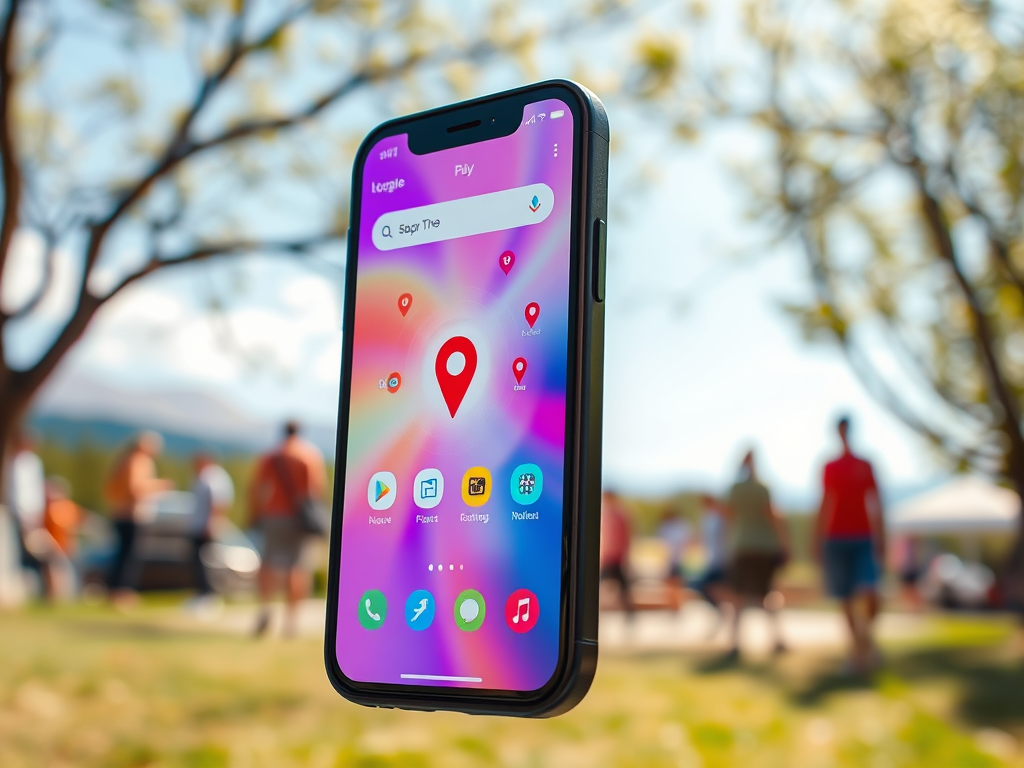
What excites us about app development
In the first installment of this series, we explore what excites us about working with mobile apps, how it differs from more traditional forms of technology development and what we are looking forward to in the future.
Bridge between digital and real world
Mobile apps are perfectly positioned to bridge the gap between the digital and real worlds. Where much of traditional technology belongs indoors- in a server room, on a computer, or on a laptop – mobile apps can join us into the outdoors in our pockets. This is unlocked by the cellular technology that enables us to interact with internet services while out and about.

This might seem obvious, but it is something that is easy to take for granted. We’ve worked on a number of outdoor projects, unlocked by a mobile app (such as the Cairngorms SnowRoads project).
In these projects, we’ve harnessed various mobile specific technologies to blend the real and physical worlds together, the main ones of these being location detection, offline working, the camera and augmented reality.
Location Detection
The existence of GPS technology in mobile phones enables location based interaction in apps with more precise accuracy than that of a laptop or computer app or website. It does this by both triangulating the position of the device in relation to cell towers, as well as using satellite positioning where a clear view of the sky is possible.

This high precision location detection opens the door for highly specified operations and can be used for anything from location based gaming (think Pokemon Go), security (ensuring the individual is on site) and location based in app prompts.
We have used location services in many of the apps we have worked on. In some of our corporate apps, we have used it to ensure that individuals logging into the system are based onsite for security reasons. We have used it for gaming tech akin to Pokemon Go and also in tourism apps for location based prompts to show relevant information when a user goes near a specific point of interest.

Offline Working
Offline working is a crucial offering of mobile apps. Where websites are limited by how much data they can store in cookies (not the crunchy type!), mobile apps have an unlimited store available.
Apps store data in secure ‘sandboxes’, siloed data stores that don’t allow for any cross access. This ensures that the data stored for each app is secure from any other malicious apps that might be installed accidentally. This allows apps to safely store sensitive information without fear of malicious access.

The increase in data storage available to apps comes with greater responsibility; Apps now have to declare how they store that data and, more importantly, how they intend to use it for first and third party use. This information is displayed publicly on the App Store. This new transparency ensures that users can trust apps that are given such large amounts of trust.
If apps want to send data to any third parties (such as for marketing), the user must explicitly provide their consent as of iOS 17.4. This has greatly empowered individuals to choose how their data is used.
By harnessing these big data stores, apps can handle massive data loads like video and image processing, high end gaming and the ability to carry on working when the internet drops.
We have used offline working capabilities to store and stitch together large video files in some of our video processing apps. We’ve also used it to enable users to carry on with corporate important tasks while on the road side, in factories, offshore or In other zones of poor, low or no internet.
Camera
It would be impossible to talk about the cool features that apps can tap into without mentioning the camera. Having a camera on 100% of your customer base opens up a whole world of user generated content.
We have worked on many apps that harness the technology to allow users to upload their own content, to take their own pictures and upload them to the cloud. We’ve also worked extensively on video capturing, processing and stitching, using low level camera technology to allow high quality video and audio management direct from the device in the user’s pocket.

This can be especially important in the workplace which is increasingly allowing phones into the office. With the ability to capture incidents, photograph documents and the requirement to evidence work becoming all too familiar aspects of daily office work.
Similarly QR codes are now deeply embedded into our society as a jump point from the real world into the digital. We have harnessed deep linking in our apps to jump from a QR code straight to a relevant asset, page or document.
App Stores
The app stores themselves provide an undeniable crucial role in the success of apps. Offering basic marketing opportunities is one thing, but they also work importantly as curators of their respective platforms ensuring only quality apps are allowed on their stores. Gone are the days of the fart app!
Launching an app into an App Store is much like launching a product in a supermarket, the supermarket wants to make sure that the app is a unique and interesting prospect for potential customers, is of a sufficient quality and that it follows the rules and regulations of the market it is being deployed into.
Where the analogy falls down, however, is that these App Stores have major monopolies on their respective platforms. This makes pleasing them extremely important. Like it or loath it, this is the lay of the land; not adhering to their human interface guidelines, failing to understand the issues that can arise during deployment, or not following the required compliances can result in a rejection, or even worse, a ban.
We have launched over a hundred apps onto the App Store and always leverage our past experiences to ensure that new projects we work on are successful, any potential pitfalls are known well in advance, and a strategy is made for circumventing and resolving any issues that arise.

Regardless of the above, launching an app into the App Store gives such an unrivalled access to ease of download, ease of update and other vendor advantages like in-app purchases and in-app reviews.
Augmented Reality
Probably the most exciting advancement in the mobile space in recent years, is the introduction of augmented reality.

By using mixture of depth cameras, 3d rendering and spacial audio, apps can now provide digital overlays over real world spaces with increasing accuracy and effectiveness. This technology has several interesting applications from augmented games, digital prototyping and even surgeries!
In our own projects, we’ve used the technology to overlay animated models over physical maps, show the direction of points of interest in a tour and also to provide enhanced gaming experiences.
We plan on doing a full blog post on augmented reality on it’s own very soon so we’ll leave it there for just now!
Contact
We hope you enjoyed reading this blog post. If there are any other topics you would like us to cover or you’d like to chat about any of these topics, please fill in the details below:


At Cog Mobile, we specialise in building high-quality apps and websites for our partners. With over 12 years of industry experience, we cater to organisations of all sizes.